
By Jack Schiefer, MCA, ISA, Urban Forestry Manager and Tree Warden for the Town of Brookline, Department of Public Works
This informative article is published in the Fall/Winter issue of PLACE, the Brookline GreenSpace Alliance‘s magazine. The Brookline GreenSpace Alliance is a member of the MMOC.
What does it mean for a resource to be public, and how many of our resources are truly public assets? At a time when the public realm feels increasingly important to protect, street trees and parks are steadfast reminders that social infrastructure remains a necessity.
Many factors shape the health of an urban forest. These systems have to contend with urban contamination, new pests and pathogens, climate change, and much more. As the Urban Forest Manager, I have the privilege of working to build resilience into this system while reacting to challenges as they arise.
The Town of Brookline’s 2021 Urban Forest Climate Resiliency Master Plan provides a roadmap for this work through the critical framing that trees are integral to addressing climate change. This plan assesses existing conditions to guide a data-driven operational approach to address urban heat and climate change. This plan also evaluates Brookline’s canopy trends over 5-year windows to identify where canopy has declined and how that can be addressed. It proposed a Tree Preservation Bylaw for private property, which community leaders and Town staff passed in March 2025, and continue to implement and refine.
Overall, this plan provides a framework for building greater resilience into the urban forest. Resilience comes in many forms, and building diversity into the urban canopy is one important protective measure. This refers largely to biodiversity, but also includes age diversity, spatial diversity, and functional diversity of different ecological traits and behaviors. It’s important to have trees that are fast growing and early-successional as well as some that are slow-growing and provide more long-term stability. Similarly, a mix of taprooting and more shallow-rooting species allows the canopy to utilize different soil horizons and moisture layers. Stress tolerance varies notably across species, and cultivating a mix of species helps prepare the urban forest for uncertain future conditions.
The Town of Brookline also becomes more resilient as a community and urban forestry system with increased participation, stewardship capacity, knowledge, trust, and collective investment into the urban forest. The Town hosts Stewardship Sundays, tree tours, community planting events, and other programming to continue to build this social resilience into the system. Friends groups and community leaders also do an incredible job building and stabilizing this fabric of education, care, investment, and stewardship.
Infrastructure investments are usually most valuable immediately after installation. Benches, roads, and plazas inherently wear over time with use and weather. Trees, however, follow a remarkably different graph. They are among the only pieces of infrastructure that increase in value as time passes. Larger trees provide more shade, drink more stormwater, sequester more carbon, and clean more air. This is a salient reminder of the importance of investing in our community’s mature and Heritage Trees. It is also a beautiful reminder why planting new trees is a capital investment that creates disproportionate value over the long term.
Working with trees requires patience and intentionality because their magic works on many timelines at once. The public benefits accumulate with time and extend throughout the community. These benefits are too easy to overlook and undervalue, but that is why the Town of Brookline is committed to planting, maintaining, and cherishing our public trees. The Town supports this work through the Capital Improvement Program (CIP) process, Community Preservation Act (CPA) funding, and many other grants and programs. These projects allow DPW staff to tackle large investments that holistically consider landscape design, historic preservation, green infrastructure, transportation, arboriculture, horticulture, and more.
Brookline residents also play an important role in building this resilience. Planting new trees on private property, investing in the care and stewardship of existing trees, and considering thoughtful pruning all contribute to the long-term health of our urban forest. Through the Town’s Front Yard Tree Program, residents can partner with the Town to plant trees on private property near the public right-of-way, expanding the benefits of our street tree canopy where public planting opportunities may be limited.
It is a privilege to think and work in the immediate but to plan on “tree time.” We have the opportunity to think about communities and generations to come and to plan now for the future with homage to the past. Trees have this remarkable ability to connect people and spaces across the decades, and we as municipal forestry staff, and as a community, have the beautiful task of investing in these organisms and supporting these connections now and in the future.
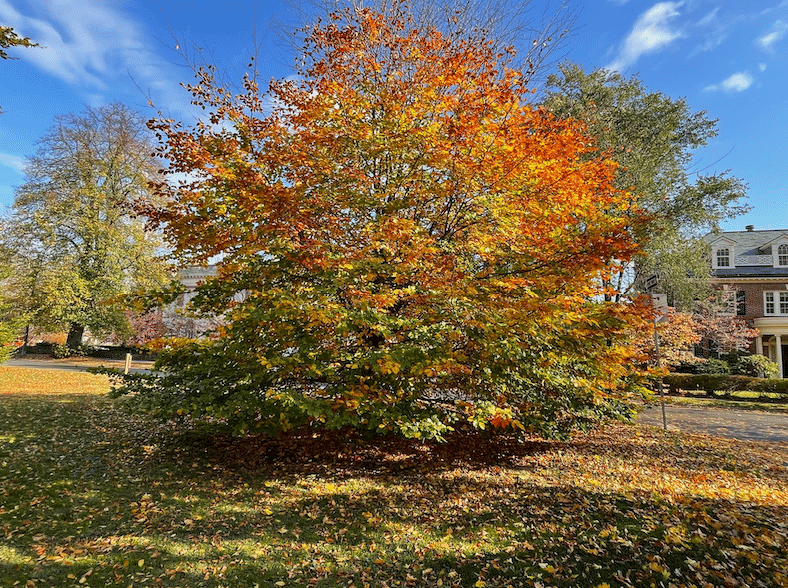
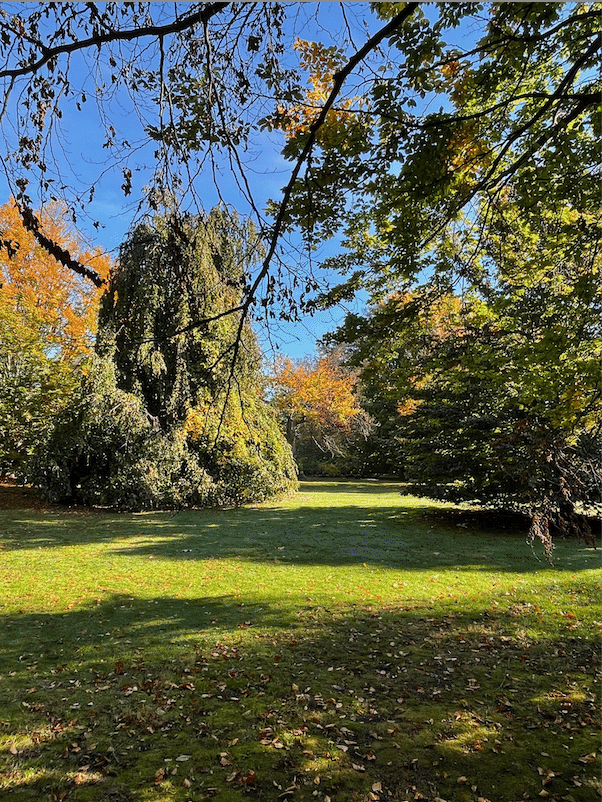
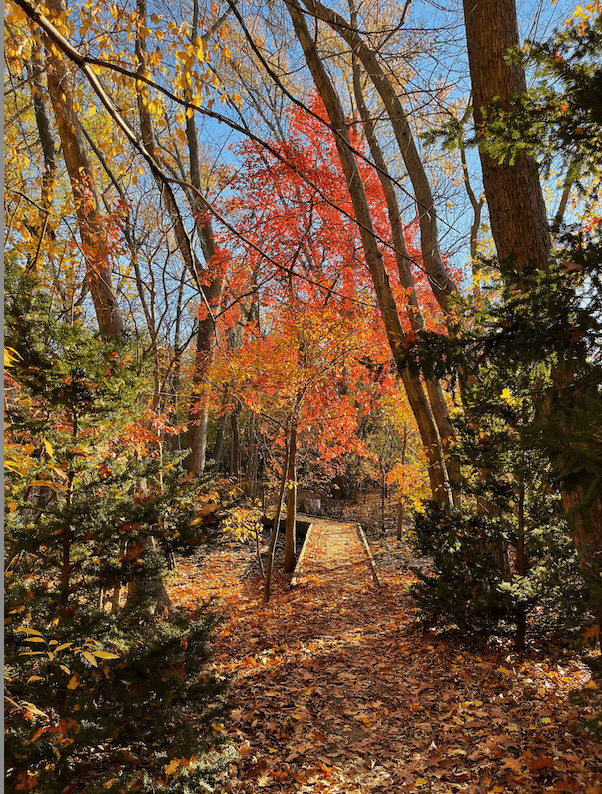
Photo gallery: John Shreffler